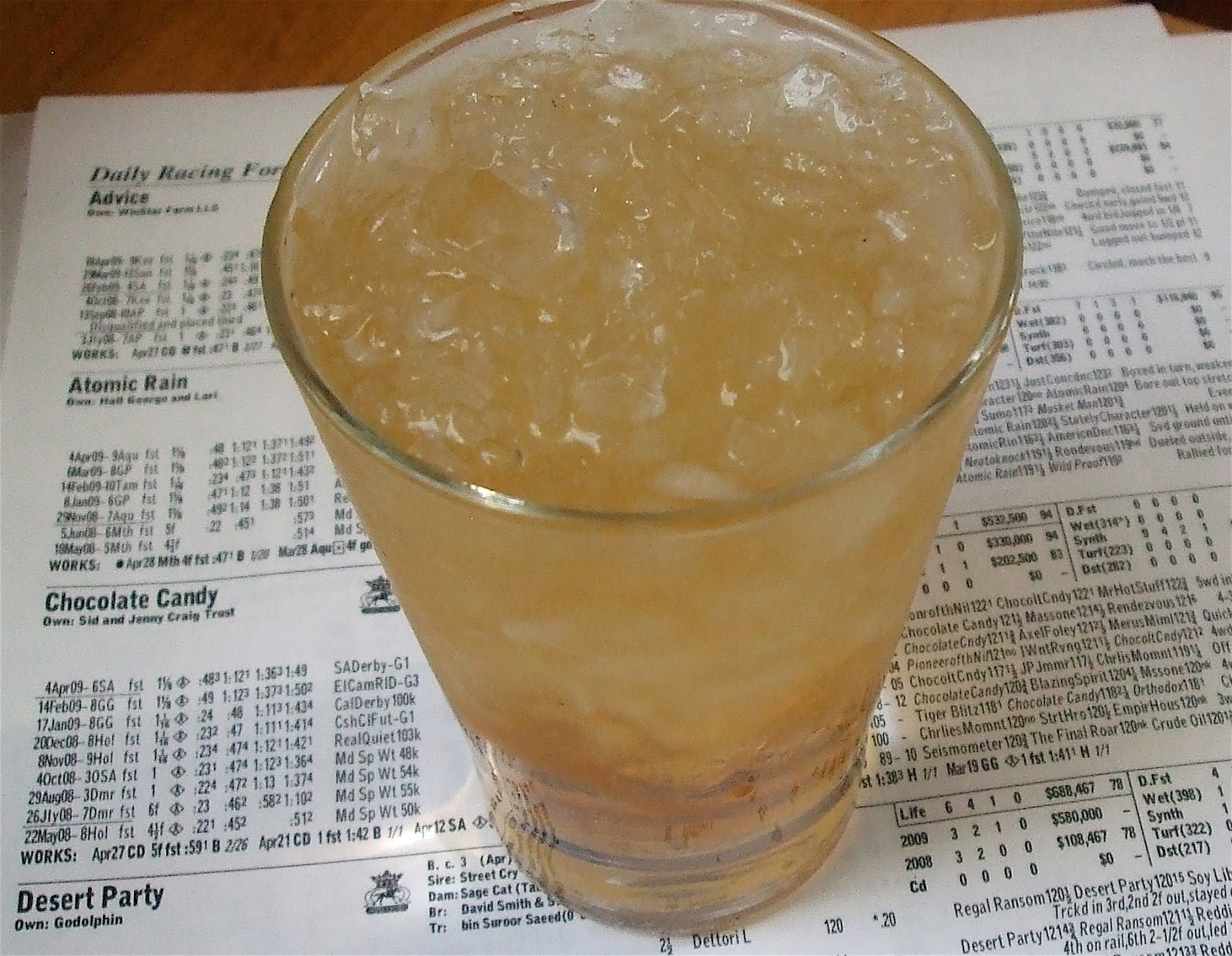
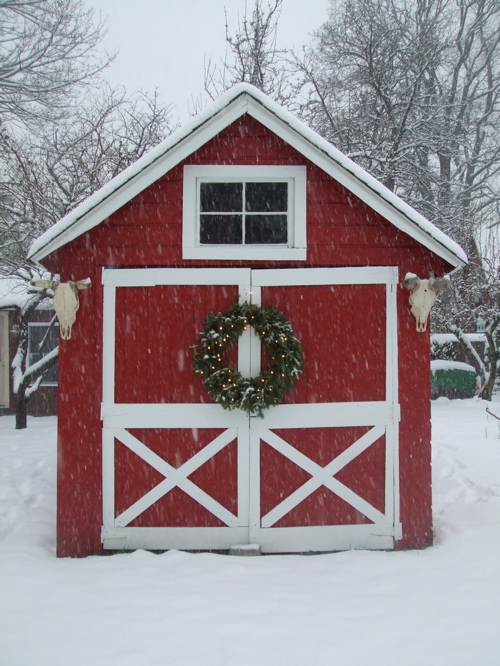
Thursday, April 22, 2010

The Barrel Giveth, and the Barrel Taketh Away

[Originally published on the Huffington Post Food]

Years ago, my wife and I sat down in the Brown Hotel in Louisville, Kentucky, to taste some bourbon with Joe Castro, who was the chef at the time. At one point he grinned mischievously, excused himself, and returned with a small flask of white dog from a major distiller tucked under his arm. White dog is what distillers call whiskey when it comes off the still, but before it goes into the barrel. It is, in other words, raw whiskey, without the mellow flavors and rich hue that the barrel brings. It is as clear as water and if it is destined for the barrel, as opposed to the bottle, is strong. I’d toured a few distilleries, and I’d had the occasional sip off the production line, but I’d never tasted professionally distilled white whiskey in a glass, side by side with what it would eventually become.
What I saw was the progression from the raw spirit to the cooked. The charred oak of the barrels gives flavor--vanilla, caramel--and takes away the hotter flavors, but at the core of whiskey remains the flavor of the white dog.
I named my book about moonshine and small scale distilling Chasing the White Dog. It came out in February 2010, and I think my timing was good: It’s been 200 years since this much white dog has been on the shelf. White dog is hot.
I’d have thought that the big market for white whiskey would be the whiskey enthusiasts, that anyone with a subscription to Malt Advocate was going to want the unadulterated cereal grain flavors that are the framework of the spirit they adore. I’m not sure if that’s what’s happened. I think that whiskey folks probably are exploring white dogs, but the real enthusiasm seems to come from the cocktail side of the drinks world. (It should go without saying that these crowds are far from mutually exclusive.)
At the fantastic Sorrento Hotel in Seattle, I poured drinks with Christian Krogstad, one of the owners of House Spirits. (In all fairness, he did most of shaking and pouring and I did most of the speechifying and joking around behind the bar.) We made a version of the white manhattan which we called the Willis. It was simple: House Spirits Rye White Dog, blanc vermouth, and a blend of Fees and Regan’s orange bitters. At Nopa in San Francisco, Neyah White uses Death’s Door white whiskey and adds a little Benedictine. In the Columbia Room in Washington D.C., Derek Brown uses white rye from Copper Fox, replaces the Benedictine with apricot brandy, and adds a dash of Laphroaig. They are all delicious.
The white manhattan has been mentioned quite a bit in the press, and has become the de facto white whiskey drink. As the mercury climbed for the first time this year my thoughts turned to bubbles and citrus and tall, refreshing, icy drinks like the Tom Collins. I remembered that we also poured a drink we called the Jack Collins, made with white whiskey.

This cocktail highlights the flavor profile of white whiskey in a very special way. I love a whiskey sour, for instance, but there’s often a strange clash between the round, vanilla and caramel flavors of the oaked whiskey and the sharp, clean zing of the sugary citrus. White whiskey plays along perfectly.
Luckily, I’d recently acquired a bottle of Buffalo Trace white dog -- the same white dog that goes into a barrel and eventually becomes George T. Stagg bourbon. Perfect. Buffalo Trace’s white dog is from Mash #1, a corn heavy bourbon mash. It is surprising, brilliant, and clean. In the cocktail the corn sweetness came through, and the grainy character remained. At 125 proof, it’s very strong. It’s surprisingly drinkable even at full strength, but be forewarned and pour lightly if it’s the white whiskey you choose for your cocktails.

The Jack Collins

2 oz White Whiskey
1 oz Lemon Juice, freshly squeezed
1 t superfine sugar
soda water
ice
optional garnishes: brandy macerated cherry, orange slice.

Shake white whiskey, lemon juice, and sugar in an iced cocktail shaker and strain into a tall glass filled with ice. Top with soda water, stir once. Garnish, if you like.


Tuesday, February 23, 2010

How to be a Criminal: Bonus track #2

There's a steady stream of criminal silliness out there.

This guy is an addendum to last week's entry, I suppose, that drugs & drink, despite what you'd think, don't mix. I think it goes without saying that criminals like to drink, and they like to get high, but it reminds me of one of my favorite moments in Pineapple Express. Saul (the protagonist drug dealer) suggests that he and Dale (Seth Rogen) smoke a joint before they attempt to overcome the next obstacle, and Seth Rogen's character says: "In case you haven't noticed - which you haven't, 'cause from what I can tell, you don't notice anything ever - we are not very functional when we're high."

This guy couldn't make it until Miller time, and cracked a jar while he was delivering the 'shine.

Friday, February 19, 2010

This is your brain


"Collusion relies upon good memory. Stoners make horrible con men." This is from the pages of the White Dog, and leads us to item two in our series on How to Be a Criminal.

How to Be a Criminal, Item 2:
Surprisingly, drugs and crime don’t mix. Stoners will forget what they have to remember, crackheads are unreliable, meth heads are crazy. Even drunks—they’ll either get pulled over for driving drunk or they’ll get in a fight.

The issue, at the time, was a certain individual's inability to remember previous conversations, but everywhere I went I learned stories. Why were the Stanley brothers pulled over with 473 gallons of moonshine in the back of the Econoline? Because they were driving erratically, due to their BAC. Why did the cops search the van? Because of the reefer smoke.

Thursday, February 11, 2010

Meals on wheels

I was attempting to follow up and see what happened to the couple who were caught last summer -- I'm sorry: "set up." That's not right either, is it. Allegedly set up. There we go. They were allegedly set up and subsequently caught with a few gallons of moonshine inside a daycare center.

Read the original bust of the couple that ran the North Carolina Daycare here.

Here's a picture that was snapped at the bust:


The blue capped jars (the ones next to the sawed off shotgun on top of the beer which is holding up the milk jugs of moonshine?) are Courvoisier and a jug of Seagrams gin. You can see that more clearly in another shot, which also details revolvers and fanned out bills.

Among the comments on this story I found someone suggesting that "the perfect front" for a bootlegger would be to "drive a regular Meals on Wheels route." Which sounds a lot like the old ice cream truck drug dealer thing.

The thing is: it's not as if the cops busted in and found some guy upstairs drinking moonshine with a shotgun in the dresser drawer to protect his house. These people were selling booze out of a daycare center. The Meals on Wheels/Ice Cream Truck facade may, in fact, be a great cover. This one is not.

This didn't make it into the book. Had it happened earlier, I'd have been tempted to go down and follow their case. But these two definitely deserve a spot in the How to be a Criminal series.

How to be a Criminal, Bonus item #1: Keep the general standards of society in mind. Don't sell drugs at the playground. Don't run your nip joint in day care center.

Wednesday, February 10, 2010

How to be a Criminal -- a series

I heard a lot of stories from the wrong side of the law over the last four or five years, and almost without exception, I was surprised by how badly the crimes attempted were conceived and executed. Clearly, movie crime is overblown. I know that what I saw in The Italian Job never happens. But it has become obvious why D.B. Cooper deserves top spot in the criminal hall of fame.

Most crime is conceived by morons and carried out with breathtaking stupidity. I actually heard, for instance, of some guys who had grown enough marijuana to fill a big rig. They didn’t want to haul it right away, so they hired a guy to watch it over night. The guy they hired was a crack head.

So, in Chasing the White Dog, I decided to gather some tidbits along the way and present them as a series titled How to be a Criminal.

Here’s the first one:

How to be a Criminal, Item 1: Do not, while on probation or having recently come to the attention of the law, engage in large scale felonies with strangers.

Wednesday, October 14, 2009

The greatest trick the devil ever pulled

Everyone remembers the line from The Usual Suspects; the greatest trick was convincing the world he didn't exist. Spacey said it with a twinkle in his eye, as I recall. My friend Matt Rowley (check the awesome present he gave to William S. Burroughs) was the first to use the line in reference to the modern moonshine business.

Over the last few years, I've tracked moonshine busts with much more than a cursory interest. One of the arresting officers says, almost without fail, that either they never see any moonshine any more, or that this bust is the largest one they can remember. My clipping file holds 265 articles (obviously some are repeats, and some aren't all that recent, but I doubt many go any farther back than the 90s). My online bookmarks number 129.

Clearly there's a disconnect, or a short term memory problem, or something. 300-odd busts in the last few years might not register in comparison to how many people have been arrested for assault or possession of a controlled substance, but it's hardly non-existent. And yet, when they busted Roger Lee Nance in North Wilkesboro with 929 gallons of moonshine a few days ago, the lead read: "in one of the largest liquor seizures in recent memory."

I'll give it to them this time, that's a lot of hooch to have on hand.

Wednesday, October 7, 2009

The Gun, the Blackberry, and Seven Pounds of Pulled Pork

Last week, I received an e-mail with this picture:

The text of the e-mail couldn’t have been more straightforward. My friend -- who had just shot these birds -- typed “Smoker?”

You’ve got to love a Blackberry put to good use.

Pheasants aren’t very big. They’d certainly feed us, but they’d look a little lonely in the smoker. Just a few days before I had tended to a small square of pork belly all alone on the rack, and throughout the cooking my joy was underscored by a sense of opportunity lost. All that smoke, all that good peach wood burned, just for a small square of belly. I should have planned better. I should have put a shoulder on, a couple of chickens, some sausage, whatever.

 I wouldn’t make the same mistake twice. The pheasants would go on next to a seven-and-a-half pound butt. For reasons of timing and convenience that aren’t particularly germane to this, I decided to reverse my process. Most barbecue folks agree that after about four hours, you aren’t getting any more smoke flavor into meat. You’re still cooking it, but maximum penetration has been achieved. I’m not sure if it’s true, but I have cooked many times as if it were, and I like the end product. So my technique -- or what was my technique -- involved a few days. Rub and Smoke the meat on day one. Then slow roast it in a wet environment on day two. Pull it and heat it on the stove on day three. It’s a fun way to get pulled pork, and it allows for lots of adjustment of seasoning, and lots of snacking.

This time, however, I started the meat in the oven. First, I rubbed it. I change my rub all the time. This one had a little rubbed sage, some coriander, a lot of red & black pepper, and salt.

In the bottom of a roasting pan went apple cider, apricot vinegar, half a beer, and a sliced onion. Tinfoiled the top. Slid it into the oven, which was at a mellow 250 degrees.

I took it out seven hours later, peeled back the tinfoil veil, and plucked off a piece of juicy, melting pork. Then I ate another. This was already a very serious piece of pig. It was sweet and spicy. The vinegar had steamed into the meat. It was so tender that it ran a pretty serious risk of falling through the roasting rack.

Standing at the cutting board, I muttered a nonplussed “Huh . . .”

How could I get it in the smoker?

The tinfoil that had been on top of the pan was right there next to it, looking an awful lot like a bowl. I tried to keep the chunks large. Here’s what I got:


I sprinkled some more rub on the meat and into the smoker it went. Here it is about half way through, looking good:

I have made hundreds of pounds of bbq in my life. And this may have been the best. The open surfaces picked up the smoke flavor very nicely. The jagged edges turned to crispy bits of pork goodness. It cooled, I tore it up, and I’ve been eating it and giving it away for a week.

The pheasants? They were delicious.


Tuesday, July 7, 2009

What I'll do on my Summer Vacation

Tales of the Cocktail is one of the coolest parties of the year, and like the other ones (Royal Ascot, for instance) the sheer numbers of the thing astound. Last year in the big old Monteleone, all white and gold and aggressively air conditioned, well over 12,000 attendees went through 6,000 pounds of ice,  8085 mint leaves, 61 cases of Limes, and 23 pounds of Cucumbers. (The year before they used 800 watermelon cubes and 560 gin soaked dried cherries: You could follow trends in the cocktail world by watching these numbers change.)


At Tales, the public gets a great show, some wonderful opportunities, and many tasty cocktails. but while it is a good festival, it must be noted that the drinks crowd  — the writers, importers, distillers, reps, bar owners, mixologists, and retailers — dominates the scene. (At one point in a seminar last year a young woman prefaced her comment with “I don’t work in the industry, I actually pay for my drinks.” This was met with thunderous applause.) Strange celebrities of the world of intoxicants hustle through the halls, doing the West Wing walk-and-talk like besotted advisors to some mad campaign.  You can’t throw an ice cube without hitting a smartly dressed woman wobbling on high heels and shilling for a new liqueur. And everywhere, the best bartenders in the nation, looking exhausted, dirty, and hungover, shaking up drinks for us. (How exhausted, dirty, and hungover can a bartender be? Ask Patrick DeWitt.)


Throughout the hotel, liquor companies sponsor suites and offer tastings of their products and their signature cocktails. The ballrooms are converted to tasting arcades, with expectant bartenders working the tables like craft fair merchants, their offerings laid out before them. Last year was heavy on the cucumber and St. Germaine. 
    In the midnight hours, more suites, invitation only after-parties and after-after parties that roll on until everyone finally falls down.
    Tales starts Wednesday, and as of that moment every serious bar in the nation will be run by the third string. If you’re looking to get more than a Gin and Tonic or a shot and beer, you better come down to New Orleans to get it.
    I plan to post to the Ocean quite a bit while I'm there — even if I have to cover an eye to see straight. Wish me luck.


Wednesday, June 17, 2009

Young whiskey: the tip of the tongue taking a trip of three steps down the palate

John Hansell, the editor and publisher of Malt Advocate, has brought up an interesting question on his blog. Using Jim Murray’s ratings as a “springboard” he writes: “I see emerging, from various sources, [. . .] a paradigm shift where young whiskies seem to become grouped together as a style, and then rated and scored based on the relative quality within that style, not on an absolute quality.” He poses this as a question. Is young whiskey a style?


The idea, I think, is that young whiskeys might be undeserving of their high marks, because it is inconceivable that a young whiskey could stack up against an older one.

(There’s a whole other conversation to be had about rating whiskey, stacking things up against other things, and all that. It’s clearly a weird exercise, but I think the drinking public needs something.)

The real question: Do you like the whiskey itself? Or the oak of the barrels? Is the implication here that “absolute quality” is equivalent to “oak?”

Whiskey is an excellent oak delivery system, but the barrel is not the whole story. That’d be like saying that it doesn’t matter what kind of meat you use for barbecue (another excellent way to get the complicated flavors of wood and smoke into your mouth).


I know my bourbons much better than I know my Scotch. In fact, I’d have stayed out of the conversation entirely if they hadn’t mentioned American whiskey -- at least I’d have limited myself to dropping “Ardbeg 10 is Really Good” in the comments section.  American whiskey is mentioned, however, and so I’ll stay close to home and start by comparing three bourbons I like a lot: Buffalo Trace, Evan Williams 7, and Elijah Craig 12.

I’m assuming that most of the whiskey in a bottle of Buffalo Trace is four years and one day old, because it doesn’t have an age declaration. In a side by side tasting, I think the Craig and the Trace pull ahead of the Evan W (although there’s not a real clunker here). Certainly the Trace scores higher than the Evan W. and on the right day I think it would score higher than the Elijah. More to the point: they are in the same league. No one at this tasting would say “Wow, this one here, clearly the youngest, just isn’t standing up to the others.”

There are (at least) two things that make whiskey: the new make spirit (which is called white dog) and the barrels.


The two elements should match, is my thinking. If there was no flavor element coming into the whiskey from the white dog, then all the barrels would be full of vodka.

Sometimes, barrels get in the way.

Mr. Hansell, in the comments section, wrote: “If a whisky (or spirit) is already getting a 96 rating, how will it taste at 8 or 10 years of age? And what score will it earn? There’s not much more room for improvement between 96 and 100 points. Are these whiskies actually peaking at 1-3 years of age? I doubt it.”

A year ago I was sitting around with Jake Norris at Stranahan’s  and we had an array of glasses before us. He was pulling stuff out of barrels -- I got to taste a few of the Snowflakes well before they were released. One of the things we tasted was the oldest barrel they had. Probably eight years old by now. I thought it was really good and I told him so, and I asked him if he ever thought they might do single barrel releases of the older stuff they’ve got.

He said something like “Well, it might be good. But it’s not Stranahan’s anymore.” And we turned to our original glass of Stranny’s (which is blended from barrels 2 to 5 years of age). He was right. The flavors that make Stranahan’s what it is had been stepped on by the oak. All that chocolate porter malt, all that lively grain flavor had given way to something more like bourbon. I love bourbon, and I’d still drink a limited release Stranahan’s, but Jake was right. That whiskey isn’t bottled young because they have to get it out the door. It’s bottled when it’s bottled because that’s what they want it to taste like.


Sunday, May 17, 2009

Moonshine bust on the Coast

I assume that "common nuisance" is a tag meaning unlicensed bar, and that these folks were selling moonshine on the beach.

"Larry Parker, 57, of Chesapeake was arrested Thursday on 12 charges of sale of alcoholic beverages without a license, possessing and transporting untaxed whiskey and maintaining a common nuisance . . ."


Thursday, May 14, 2009

A valuable experiment

I take it for granted that some drinks are better stirred, and I know the rules the way I know the rules of the road or grammar (shakily). I'm really glad to see that Reese at Cocktail Hacker actually had the wherewithal to shake one, stir another, and snap a shot of both.


Things are slow around here, it's true


There's work to be done!

Some of it
involves intemperate gambling.


Thursday, April 30, 2009

Round Two: Early Times

Woodford Reserve likes to say that it is the official bourbon of the Kentucky Derby, but everyone who has been there knows that’s not exactly true -- scratch that, it is only exactly true. Woodford paid a lot of money to tag the Derby. While they were at it they sponsored the Woodford Reserve Turf Classic, which immediately precedes the Derby. Fair enough, but the drink that is poured at Churchill is the Early Times premixed Mint Julep. There’s even some people dressed up in giant Early Times bottles dancing around in the paddock. (Other people saw that, right?)


When the fans stand and wobble and slur through the forgotten lyrics of “My Old Kentucky Home” the whisky they are spilling on their shoes is Early Times Kentucky Whisky.


I don’t know why Brown-Forman decided to spell it whisky, without the American ‘e,’ but I do know that the reason it is not a bourbon is because some of the product was aged in barrels that are not new. Bourbon must be aged in unused barrels, period. According to Chuck Cowdery, bourbon expert of the first water, this saved some money and brought the Early Times spreadsheet into shape when they needed it to be. Since Brown-Forman sells (lots and lots of) Jack Daniel’s Cowdery says that they believed at the time that no one cared if the bottle said “bourbon” or not.

I like Early Times a lot, always have. It’s straightforward, a little rough around the edges, good with ice. Walker Percy’s Dr. Tom More drank a lot of it, and that’s a good recommendation. It’s unbeatable at its price point. And it makes a killer mint julep, especially if you’ve had mint syrup infusing in the fridge overnight.

Pour a tablespoon or two of mint syrup (I leave it to you, it depends upon how minty your mint is, and how sweet you like your drinks) into a glass, pour in a double shot of Early Times, fill it with crushed ice (half a tray of ice in a clean towel smacked with a meat tenderizer will fill one rocks glass), stir it a couple of times with a spoon. Don’t fold it when you stir, just make the ice turn around in the glass. I swear I can almost taste the ink on the betting slips.


The pre-mix is very good, too, and lots of liquor stores have stacks of it come Derby Day. I’ve been made fun of for this, but the truth is that the pre-mix is best if you add a shot of bourbon to it.


Tuesday, April 28, 2009

Enter the Julep

For a horse player there is no week like the week that leads up to the Kentucky Derby. Basically, leading up to the first Saturday in May, if it’s not about the Derby, my brain cannot process it. Luckily, the Derby comes with a drink. It’s a drink I think I can talk about for a week, and I’m going to try. Welcome to Mint Julep Week 2009. Expect lots of action.

Today, I picked mint out of the yard.


I put a good bit of it in a jar of simple syrup to soak. Simply put equal parts sugar and water in a pot, (I used a cup and a half of each), and turn on the heat and stand there, stirring lackadaisically until the liquid is clear. It shouldn’t come to a full boil, and really doesn’t take long at all. I stuffed a jar with mint, filled it with cool syrup (actually still slightly warm, but definitely not hot), and stuck it in the fridge. This is my favorite way to make juleps, but it is not, by any means, the only way.


And that is a fortunate thing, since I don’t like to wait. Especially for a mint julep.

The julep was first referenced in 1803,  "dram of spirituous liquor that has mint in it, taken by Virginians in the morning." (For those of you counting, I think the Old Fashioned is first mentioned in 1806, and the Sazerac in the 1830s. More on this -- and perhaps some morning drinking, just to see how that plays, I’m a Virginian, after all -- throughout the week.)

The simplest, oldest recipe I know is to take some superfine sugar and put it in the bottom of a julep cup and dissolve it in 3 ounces of bourbon. Crush ice and pack it on top of the bourbon. Put a big sprig of mint on the top of the drink. You’re supposed to drink it through a straw, and the straw is supposed to be short, so your nose is right in the mint the whole time.

(Here’s a trick: it’s hard to get the straw through the ice, and, in fact, it’s hard to get the mint in the ice, too, if you pack it well enough. You can put two straws in the cup before you put in the ice, remove one and put your mint in there, drink through the other, while nosing the mint.)

This seems, of course, like a very lackluster method, but I tell you it is not. It works. I’ll admit to bruising the mint in my hands a little, to wake it up and get the oils going (and while I’m at it, I’ll admit that the mint in my yard is actually called “Kentucky Colonel,” I assume due to its propensity for satisfying juleps).

You’re supposed to drink the thing really slowly. The ice melts, the mint gets mashed up, the whole thing gets together in that wonderful julep cup (which you’ve wrapped in a linen, because it’s too cold to hold).

Even this simplest of recipes is fantastic. In fact, there’s something so fresh and bright about it, I’m going to call it the morning line favorite for the week. Surprise counts, doesn’t it?


Tuesday, April 21, 2009

A brief undercover operation

Agents in North Carolina brought down a Moose Lodge where folks were gambling and drinking moonshine.

Thursday, April 16, 2009

Moonshine hits the Economist

Although I think I know of what this was apropos, The Economist dropped an out-of-left-field moonshine story. Click to see it.

The Kansas City Super Tiki

I’ve been remiss in updating the Ocean, and I send out apologies to all who were hurt during my absence. I tried to get a post up about the Income Tax yesterday (it’s a bronx cocktail with angostura instead of orange bitters and it would have leant itself really well to some sort of Proverb), but found the requisite sense of humor hard to muster after I’d finished my own pile of forms. What I needed was a drink, not a post about drinks.

But today is a new day. The sun is shining. The birds are on the wing. And I have had something in my back pocket that’s been coaxed out.

Behind my house we have a micro-barn and last year we emptied it out, made it into a dining room / bar, and named it Kansas City. The name is in homage to the famous Max’s Kansas City, and also simply because we figure you can do anything you want in Kansas City.


Kansas City is a seasonal venue:


It’s not heated, and we need to put the deck chairs somewhere. In the off season, I developed a signature tiki drink for the place: The Kansas City Super Tiki.

I was going to wait until we actually got the deck chairs out of the joint and opened up, but tonight’s Thursday Drink Night at the Mixoloseum is about absinthe, and there’s absinthe in the KCST, so I figure now is as good a time as any.

The Kansas City Super Tiki

1 t absinthe (simpler sweeter absinthe with strong fennel/anise flavors are better here)
1 t creme de noyaux (sub orgeat, but the pink really makes for something pretty to look at)
3 strong dashes Angostura Orange
1 oz lime juice
1 oz orange juice
1 oz white rum
1 oz golden rum
Float dark rum

Shake with ice until really cold, strain into an old school tumbler, like the one from which your aunt used to guzzle white horse scotch and soda, with lots of ice in it. Float dark rum on top. Lay a couple of citrus slices on top the drink.

TDN is hilarious, by the way. Anyone with even a passing interest in cocktails should log in and watch, and contribute, and drink, and mess up the kitchen. The KCST was considered a little tart, and I think Gabe might be right. Suggestions for improvements are always welcome.


Friday, April 3, 2009

Cadillac DeVille

The American Distilling Institute Conference kicks off tonight with a party at Anchor Distilling. There’s judging all day at St. George today, and conferencing all day tomorrow, and Meet the Maker on Sunday. The theme this year is brandy, and I’ve been thinking and drinking on brandy all week in anticipation.

Brandy -- and here I mean any spirit made from a mash of fermented fruit -- is the foundation spirit. When the persian alchemist Jabir ibn Haiyan al-Azdl put together the first alembic (and declared the vapor “of little use!”) he was boiling wine.


This is simply because grapes and apples and peaches and whatnot basically ferment themselves. It takes a lot of work to turn corn into gold. From the foundation spirit, in turn, comes one of the foundation cocktails: the sidecar.

There are a lot of cocktails worth learning, but I’m going to go out on a (admittedly sturdy) limb and say that the sidecar is among the most versatile.

Lemon Juice, Cointreau, and Spirit. If you put a bottle of Cointreau on your bar or something like it, you can always make a cocktail. Use gin, it’s a Chelsea Sidecar. Use Tequila, it’s a margarita. Irish whiskey makes an excellent drink. I like them up and I like them on the rocks. Recently, a friend wrote in to announce that he’d had an excellent sidecar made with Cardinal Mendoza and lime juice. It’s so versatile I think it qualifies as a parlor trick. But before you go off into the hinterlands of sidecar experimentation: make it with brandy. (Even cheap brandy.)


Find the proportions that appeal to you. Classic drink writer David Embury likes 8:2:1 (obsessively) and his cocktail (2 oz brandy, 1/2 oz Lemon Juice, 1/4 oz Cointreau) is far too dry for me. Perfection is somewhere between that and equal parts of all. I can’t tell you what you like. Make them, if you don’t like them, make them again.
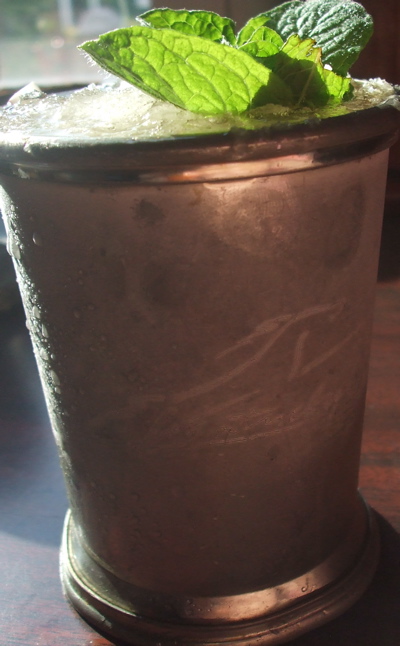
What I don’t like is the sugared rim. It makes the drink far too sweet, and headache inducing, and really the last thing you need is sugar water dripping down the side of the glass and coating your hands like you’ve been spilling juleps in the infield at the Kentucky Derby.


Thursday, March 26, 2009

The Alameda Brandy Conference

Brandy is not a word with pleasant associations. See the little old lady pushing a thimble of brandy across a doily strewn table? It’s a long climb from that little old lady’s living room to the barrel house at Jepson Winery in Ukiah, California, where Alison Schneider talks about blending brandies as if she were talking about choreographing a ballet.

In about a week and a half, the American Distilling Institute will convene at St. George Distillery in Alameda, California for our annual conference. I’ll be there, as will numerous writers and many, many distillers. Matt Rowley has written a great anticipatory piece here (he did the heavy lifting).
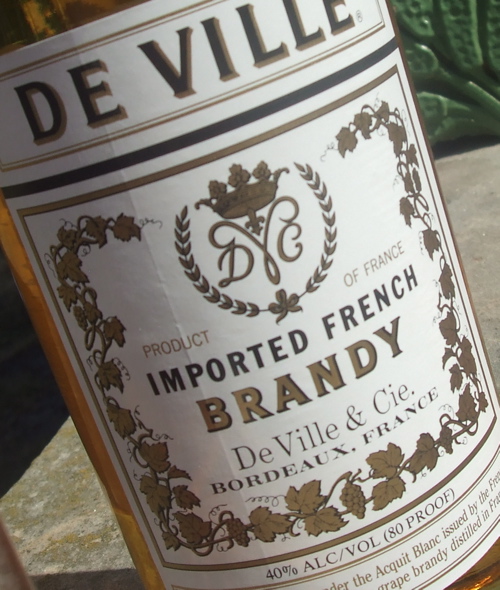


For artisan distillers, this is the key event of the year, and this year, it’s all about brandy. This will include all sorts of eaux de vie, and all types of miraculous flavors. The most surprising spirits I’ve had over the last few years have been brandies, or close to it, like the Gewürztraminer Grappa made in Petaluma at Stillwater Distillery. St. George, themselves, make a fabulous line of brandies, both aged and unaged.

These small distillers are changing the rules. Grappa, in their hands, is no longer the byproduct, no longer a desperate attempt to squeeze the last dimes out of a harvest, but a goal in itself. What’s more, small, artisinal distillers are allowed to do anything they want. Basil eau de vie? Sure. Organic asian pears? Why not? 

I’m a whiskey man at heart, but I have to admit that the real sweet spot for small scale, artisinal distilling is brandy, and I’m looking forward to seeing what everybody is doing, and what they have to say about it.

This year, for the first time, the public has a chance to drop by and get a taste of the action. Come out to St George on Sunday for  Meet the Maker from 2 to 5. $40 gets you in the door, where 40 distillers will be pouring their own wares. You can buy tickets and get more details here.

In the meantime, I’m trying to get around some brandy in anticipation. Rory Donovan’s Peach Street Distillers (he’ll be there) makes my favorite: 


Friday, March 20, 2009

A little more on Popcorn

Here's a little obituary-type consideration for the good folks at Gourmet.